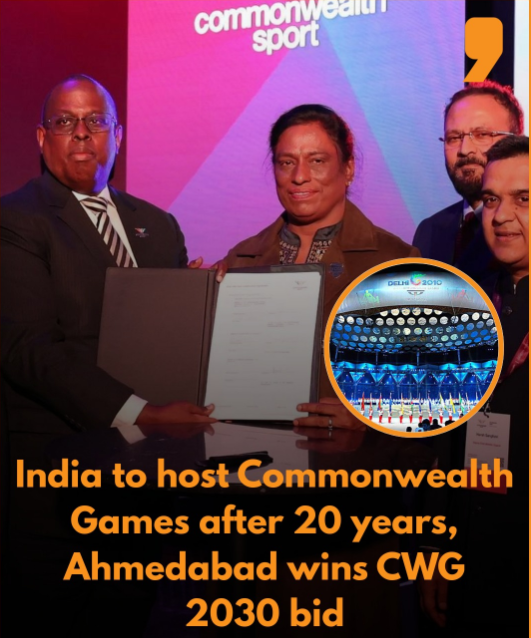
India is preparing for a significant sporting chapter in its history. Ahmedabad is gearing up to host the 2030 Commonwealth Games. The Narendra Modi Stadium is at the center of this massive undertaking. It is the world’s largest cricket venue. Now, it is poised to become the flagship arena for India’s biggest multi-sport event yet.
But beyond the infrastructure, the excitement, and the global spotlight, India has one more goal — a cultural one.
The country aims to shape the future of competitive sports. It is pushing for yoga to make its debut as a medal event at the Commonwealth Games.
Why Ahmedabad is ready for the spotlight
Ahmedabad has evolved rapidly over the past decade. The city has a world-class cricket stadium and an expanding metro network. It also has expressway connectivity and the upcoming Sardar Vallabhbhai Patel Sports Enclave. These developments give the city the scale to host thousands of athletes and spectators without breaking rhythm. The 2030 Games announcement doesn’t just validate the city’s readiness — it marks India’s rising stature in global sports hosting.
Narendra Modi Stadium: The beating heart of the Games
With its colossal 130,000-seat capacity, Narendra Modi Stadium is expected to host the grand opening ceremonies. It will also host the closing ceremonies. High-impact events are part of the schedule as well. The stadium’s modern training facilities, cutting-edge lighting, broadcast infrastructure, and well-planned transport access make it an effortless centrepiece.
Surrounding it, the Sports Enclave will handle the bulk of the competitions. These include swimming, badminton, tennis, gymnastics, track-and-field events, and more. This arrangement forms one of the most integrated multi-sport zones in Asia.
Yoga as a medal sport: India’s cultural pitch on the global stage
India’s move to advocate for yoga as a medal discipline is perhaps the most intriguing storyline of the 2030 Games. If approved, it would mark a historic moment — the first time yoga transitions from lifestyle and wellness into a structured, internationally judged competitive sport.
Here’s what that could mean:
- New global representation — Athletes from countries like Japan, Australia, Canada, and the UK already practise yoga extensively, opening the field beyond India.
- Defined scoring system — Competitions may involve posture accuracy, balance, transitions, breath control, alignment, and routine complexity.
- Cultural diplomacy — India reinforces yoga not just as heritage, but as a modern, measurable, performance-based sport.
- Expanding medal opportunities — As a non-contact sport accessible to all genders and ages, yoga could widen medal chances for participating nations.
For India, securing yoga as a medal event will be as symbolic as it is strategic — a chance to shape the identity of the Games and spotlight a discipline that millions practice worldwide.
What 2030 means for India’s sporting future
Hosting the Commonwealth Games again, twenty years after Delhi 2010, gives India a platform to show how far its sporting ecosystem has evolved. Ahmedabad’s infrastructure boom, the push for indigenous sports, and the global narrative around India’s soft power make this edition more than just another tournament — it’s a statement of capability, culture, and ambition.
Image credits:Instagram


